
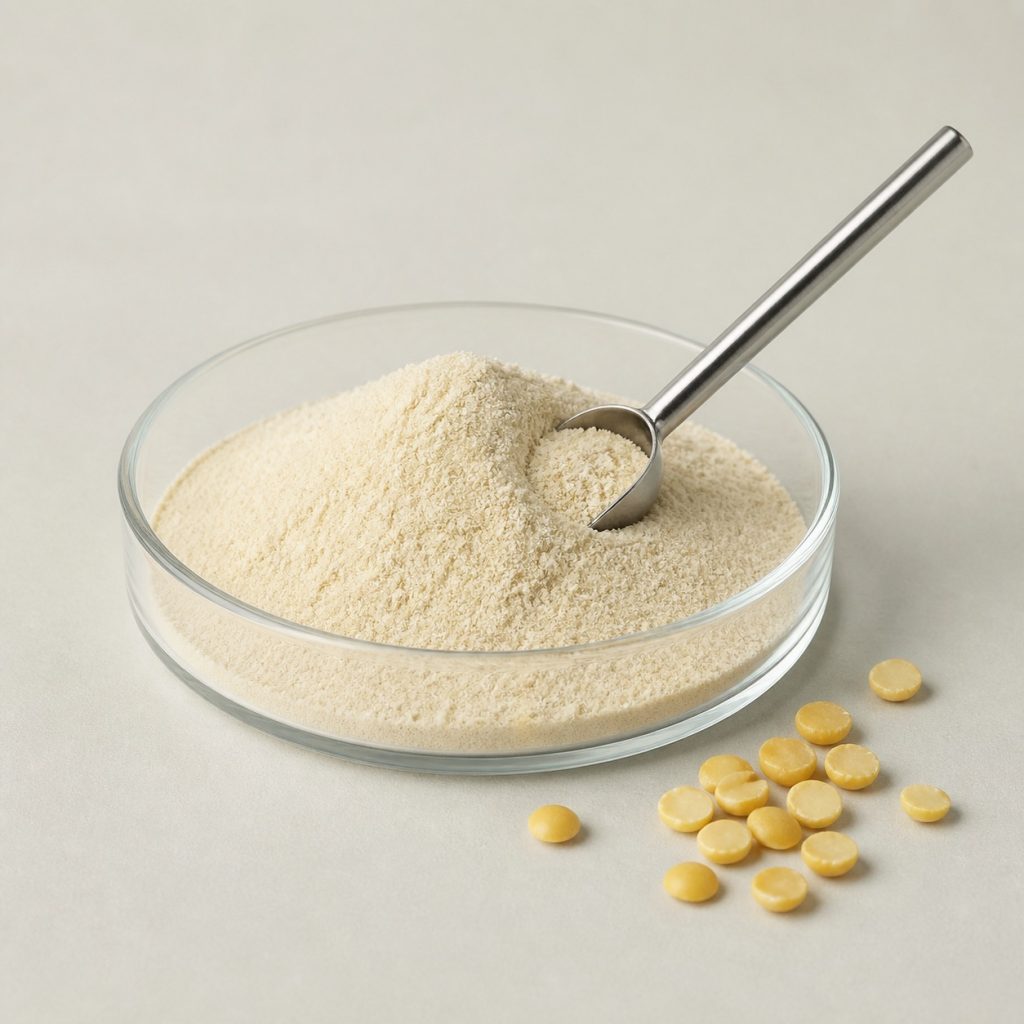
Pea protein peptide wholesale from China should be evaluated as a technical ingredient purchase, not as a simple price-per-kilogram comparison. Latin American importers need a defined specification, a representative sample, an agreed commercial lot standard and documents that match the destination market.
The term “pea peptide” is used inconsistently online. A buyer should confirm the product identity and analytical basis before comparing offers that may describe different protein, peptide or hydrolysate materials.
Start with the current 90% specification
The Winstar Ingredients product specification describes a pale yellow to milky white powder or uniform particles. Protein and peptide contents are each specified at 90% minimum on a dry basis. The current TDS, agreed commercial specification and batch COA govern the transaction.
| Parameter | Published specification |
|---|---|
| Protein | 90% minimum, dry basis |
| Peptide | 90% minimum, dry basis |
| Moisture | 7.0% maximum |
| Ash | 7.0% maximum |
| pH | 2.0–7.0 in a 10% solution |
| Bulk density | 0.15–0.45 kg/L |
The TDS also lists microbiological and contaminant limits. Buyers should review the test methods, sampling plan and batch results rather than assuming that a catalogue description is equivalent to a COA.
Translate “wholesale” into a controlled commercial offer
Marketplace listings commonly emphasize wholesale price, MOQ, factory supply and water solubility. Those phrases help reveal purchasing language, but they are not verified specifications. A usable quotation should instead identify:
- the exact grade and specification revision;
- the sample code and whether it represents normal production;
- the proposed packaging, net weight and moisture barrier;
- the quantity, shipment terms and expected preparation schedule;
- the documents available for the importing company and destination country.
Packaging is agreed with the customer. Buyers should not infer a standard bag size or minimum order from an unrelated online listing.
Evaluate the sample in the intended formulation
Protein and peptide percentages do not predict taste, dispersion or processing behavior on their own. Test the material in the complete powder blend, beverage or food system at the intended dosage. Record mixing order, water temperature, shear, pH, other proteins, minerals, sweeteners and flavors.
For beverage concepts, measure sedimentation, foam, viscosity and flavor over the expected shelf-life study. For powdered nutrition, evaluate flow, segregation, reconstitution and sensory acceptance. If the product will be exposed to heat or extreme pH, include those conditions in the trial.
Set a sample-to-scale approval plan
- Confirm the TDS and the 90% protein/90% peptide basis.
- Approve a representative sample against measurable formulation criteria.
- Review the related COA and retain the sample code.
- Run a pilot or production-scale test where process behavior matters.
- Define lot acceptance, documentation and change-notification requirements in writing.
This sequence reduces the risk of approving a small sample whose sensory or handling profile cannot be repeated in the first wholesale order.
Review microbiology, contaminants and storage
The published specification includes limits for total plate count, yeast and molds, coliforms, Salmonella and Staphylococcus aureus, together with limits for lead, arsenic, mercury and cadmium. Buyers should confirm the current test methods and applicable COA results.
The product should be kept tightly sealed in a cool, dry place and protected from moisture and direct sunlight. The documented shelf life is 24 months subject to the applicable packaging and storage conditions. Local warehouse temperature and humidity should be included in the receiving plan.
Prepare for Latin American import review
Mexico, Brazil, Chile, Argentina and Caribbean destinations may require different product descriptions, labels, certificates and importer procedures. The local importer should validate the intended use and documentation before shipment. A supplier’s general export history does not establish regulatory acceptance in every country.
Request a complete offer
See the Pea Protein Peptide specification overview and Winstar’s quality and compliance approach. For samples, documents and wholesale supply planning, send your application, quantity, destination and required delivery terms.
Contact Winstar Ingredients
For specifications, COA, samples or a quotation, tell us your product, application, quantity and destination.
WhatsApp: +86 13602030663
sales@winstaringredients.com
Send an inquiry