
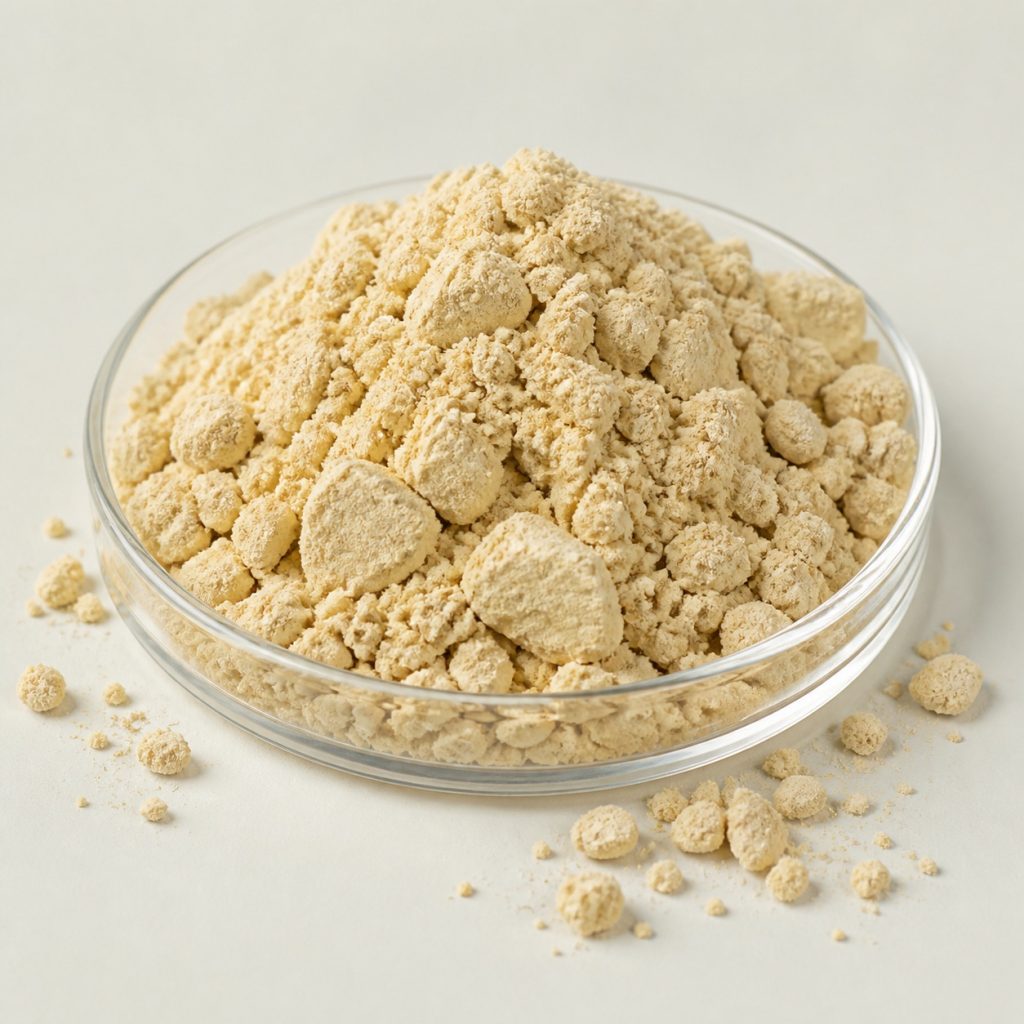
Searching for pea protein isolate direct supply from China often produces long lists of grades, prices and supplier claims. For buyers in Mexico, Brazil, Chile, Argentina and the Caribbean, the useful question is narrower: can the offered grade be defined, sampled, documented and repeated at commercial scale?
A direct quotation should connect the product identity, quality file, trial sample, packing plan and shipment terms. A low unit price does not compensate for an unclear analytical basis or a grade that performs differently in the buyer’s formula.
Define what “direct supply” covers
Before comparing quotations, ask the supplier to identify the contracting entity, the manufacturing site relevant to the offered grade and the party responsible for export documentation. “Made in China,” “China manufacturer” and “factory direct” are common marketplace expressions, but they do not replace a traceable commercial file.
- Confirm the exact product name and conventional or organic grade.
- Request the current TDS and a representative or batch-specific COA.
- Clarify the packing unit, pallet configuration and moisture protection.
- Define whether the quoted terms include inland transport, port handling or international freight.
- Confirm which documents can be supplied for the destination country.
Separate protein grade from functional performance
Winstar Ingredients publishes conventional pea protein isolate options at 80%, 85% and 90%, together with organic options at 80% and 85%. These percentages are grade designations. The analytical basis, test method and acceptance limits must be confirmed for the selected grade.
| Decision point | What the buyer should verify |
|---|---|
| Protein grade | Conventional 80%, 85% or 90%; organic 80% or 85%, subject to the current specification. |
| Analytical basis | Whether protein is reported as-is or on a dry basis, and which test method applies. |
| Functional type | Type B or Type C where applicable, with performance confirmed in the intended formulation. |
| Physical behavior | Dispersion, solubility, hydration, gelation, emulsification, flavor and color under the buyer’s process conditions. |
A 90% grade is not automatically the best option for every beverage, bakery product, dairy alternative or meat analogue. The final decision should reflect the formula, processing conditions, sensory target and cost-in-use.
Build the technical file before approving a sample
A useful sourcing file starts with the specification, not with a marketing brochure. Buyers should review the stated protein basis, moisture and ash limits, microbiological requirements, relevant contaminant limits and any physical parameters used for lot acceptance. If non-GMO or organic documentation is required, confirm that the document scope covers the quoted product and manufacturing site.
Allergen and cross-contact information should be reviewed for the intended market. A general statement does not replace the buyer’s own regulatory, labeling and facility-risk assessment.
Use a sample-to-bulk approval sequence
- Screen the TDS and supplier file against the project’s non-negotiable requirements.
- Test a representative sample in the complete formula, not only in water.
- Record measurable criteria such as hydration time, viscosity, emulsion stability, texture, color and sensory acceptance.
- Run a pilot or plant trial on representative equipment.
- Agree the commercial specification and lot-release documents before the first bulk shipment.
The sample code, production date and related COA should be retained so that the commercial lot can be compared with the material used during development.
Plan the Latin America import file country by country
Mexico, Brazil, Chile, Argentina and Caribbean markets do not share one identical import, food-use or labeling system. The importer should verify tariff classification, permitted use, registration needs, language requirements and certificate format with a qualified local adviser. Brazil also requires Portuguese commercial and technical communication for many workflows, while Spanish-language documents should use terminology appropriate to the destination country.
Humidity protection, container utilization and inland warehouse conditions can materially affect delivered performance. These practical points should be discussed together with price and lead time.
Questions to include in a quotation request
- Which pea protein isolate grade and functional type are being quoted?
- Which TDS, test methods and lot-release criteria apply?
- Is a representative sample available for the intended application?
- What packing, pallet and shipment options are available for the destination?
- Which product, quality and origin documents can be supplied before shipment?
Review the Winstar Pea Protein portfolio and our quality and documentation approach. To discuss a grade, sample or China-to-Latin-America shipment, send the application, target specification, quantity and destination to Winstar Ingredients.
Contact Winstar Ingredients
For specifications, COA, samples or a quotation, tell us your product, application, quantity and destination.
WhatsApp: +86 13602030663
sales@winstaringredients.com
Send an inquiry